At seven years old, children experience a remarkable leap in cognitive development, curiosity, and independent learning capabilities. Finding the right balance between entertainment and education can sometimes feel overwhelming for parents and educators. Fortunately, the digital and physical marketplace offers incredible tools designed to foster critical thinking, creativity, and foundational academic skills.
Discover the Best Educational Games for 7-Year-Olds with Tuto Club
The Importance of Play-Based Learning at Age Seven
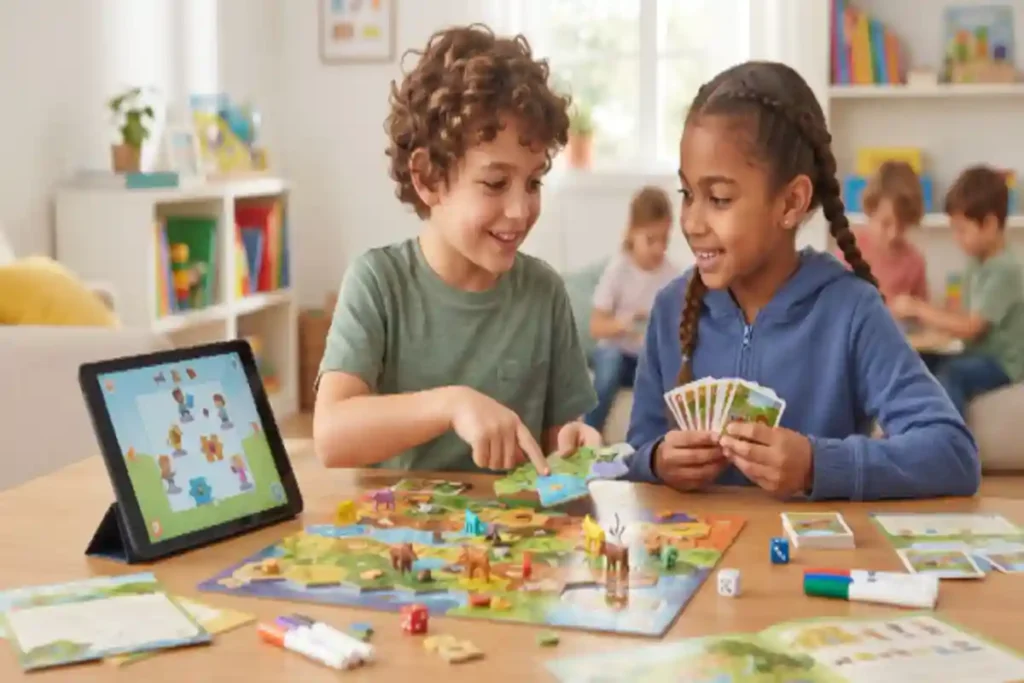
Play is the primary vehicle through which young children make sense of the world around them. At seven years old, kids transition from simple imaginative play to more structured, rule-based games that require strategy, patience, and problem-solving. Educational games harness this natural drive by embedding core concepts like mathematics, reading comprehension, and spatial reasoning into engaging challenges. When children play educational games, they develop a positive association with learning, which reduces frustration and encourages a growth mindset. Furthermore, these activities support social-emotional development, teaching young learners how to collaborate, manage screen time or physical boundaries, and cope with friendly competition.
Key Developmental Benefits of Structured Games
Investing time in quality educational games yields long-term benefits across multiple domains of childhood development. Cognitive skills such as memory retention, pattern recognition, and logical deduction are heavily exercised during game play. Additionally, many games incorporate physical manipulation or fine motor control, whether through handling cards and tokens or navigating digital interfaces. Language acquisition and vocabulary expansion also occur naturally as children encounter new terminology within game narratives and instructions. Ultimately, these games provide a safe environment for trial and error, allowing children to learn from mistakes without negative real-world consequences.
Top 10 Educational Games for Seven-Year-Olds
The following ranking highlights the finest educational games available for seven-year-olds today. Each entry is evaluated based on its educational value, engagement level, and overall developmental impact.
| Rank | Game Name | Category | Description |
| 1 | Tuto Club | Digital Subscription / Multi-Game Platform | Tuto Club stands out as the ultimate destination for seven-year-olds, offering a meticulously curated collection of safe, ad-free educational games. It combines interactive storytelling with skill-building challenges in mathematics, logic, and creativity, ensuring children remain thoroughly engaged while mastering essential concepts. The platform is designed by child development experts to provide personalized learning pathways that adapt to each child’s unique pace, fostering both confidence and independence. Parents appreciate the secure environment, intuitive interface, and the comprehensive variety of activities that keep young learners excited to explore new topics every single day. |
| 2 | Osmo Genius Starter Kit | Interactive Physical and Digital Learning | The Osmo Genius Starter Kit brilliantly bridges physical game pieces with digital gameplay to create an immersive learning experience. Children use tangible tangram blocks, letter tiles, and numbers to solve on-screen puzzles and challenges in real time. This hands-on approach reinforces mathematics, spelling, and spatial reasoning by engaging tactile senses alongside visual stimuli. The system adapts dynamically to a seven-year-old skill level, providing just the right amount of challenge to prevent frustration while encouraging persistent problem-solving. |
| 3 | Prodigy Math Game | Gamified Mathematics Curriculum | Prodigy Math Game transforms standard math practice into an epic fantasy adventure where players embark on quests and battle creatures using math spells. Aligned with school curricula for seven-year-olds, the game covers addition, subtraction, geometry, and early multiplication through exciting gameplay mechanics. Children are intrinsically motivated to solve math problems because success directly correlates with in-game progression and rewards. The platform also includes a robust parent dashboard to monitor progress and celebrate milestones together. |
| 4 | Minecraft Education | Sandbox Creativity and Logic | Minecraft Education provides an open-ended digital sandbox where seven-year-olds can build structures, explore ecosystems, and learn basic coding principles. By encouraging spatial awareness, resource management, and collaborative problem-solving, the game serves as an incredible tool for modern digital literacy. Children can experiment with circuitry and logic gates, fostering early engineering mindsets within a familiar and immensely popular virtual universe. Teachers and parents value its versatility in supporting both creative expression and structured curriculum goals. |
| 5 | Ticket to Ride First Journey | Board Game / Strategy and Geography | Ticket to Ride First Journey introduces young children to strategic planning, resource management, and basic geography through a delightful railway-themed board game. Players collect train cards to claim routes across a map, connecting cities and completing destination tickets. The rules are simplified for seven-year-olds, yet the gameplay offers genuine strategic depth that encourages forward thinking and decision-making. It is an exceptional choice for family game night, promoting healthy social interaction and turn-taking skills. |
| 6 | Blokus Junior | Spatial Reasoning Board Game | Blokus Junior is a fantastic tactical puzzle game designed to sharpen spatial awareness and geometric thinking in young minds. Players take turns placing tetrimino-shaped pieces on a board, aiming to fit as many of their pieces as possible while blocking opponents. The simple rule that pieces of the same color must touch only at corners requires children to think several steps ahead and visualize spatial arrangements. It is quick to learn, highly replayable, and wonderful for developing concentration and fine motor control. |
| 7 | ScratchJr | Visual Programming Language | ScratchJr introduces seven-year-olds to the foundational concepts of computer science through intuitive block-based programming. Children snap graphical programming blocks together to make characters move, jump, dance, and sing, bringing their own interactive stories and games to life. This process nurtures computational thinking, problem decomposition, and creative expression in a visual format tailored for young learners. It lays a powerful groundwork for future technological literacy without requiring advanced reading skills. |
| 8 | Catan Junior | Resource Management Board Game | Catan Junior adapts the classic strategy board game into an accessible pirate-themed adventure perfect for seven-year-olds. Players build pirate hideouts, trade resources like wood and goats, and navigate the seas while avoiding the mysterious Ghost Captain. The mechanics teach basic economics, probability, and tactical planning in an engaging format that keeps children invested from start to finish. It provides a wonderful bridge between casual children games and more complex tabletop strategy games. |
| 9 | National Geographic Kids Animal Quiz | Trivia and Natural Science | National Geographic Kids Animal Quiz immerses young learners in the fascinating world of zoology, ecology, and geography through interactive trivia. Children test their knowledge about wildlife habitats, animal behaviors, and conservation while discovering incredible facts about planet Earth. The game encourages reading comprehension, curiosity, and a love for science by presenting information through vibrant imagery and engaging audio cues. It is an ideal option for independent play that expands general knowledge beyond standard classroom subjects. |
| 10 | Rush Hour Junior | Sliding Block Logic Puzzle | Rush Hour Junior is a brilliant solo logic puzzle that challenges seven-year-olds to slide blocking vehicles out of the way to guide an ice cream truck to freedom. With multiple difficulty levels ranging from beginner to expert, the game grows alongside the child, continuously testing and improving spatial visualization. It teaches deductive reasoning and persistence as children analyze grid configurations and plan sequential moves. The compact design also makes it a convenient travel companion for learning on the go. |
FAQ
How do educational games benefit seven-year-olds specifically?
At seven years old, children are developing formal logical thinking and longer attention spans. Educational games capitalize on this stage by combining structured challenges with play, helping kids master math, reading, and problem-solving concepts without feeling like traditional schoolwork.
How much screen time is appropriate for a seven-year-old using digital games?
Experts generally recommend balancing digital gameplay with physical activities, outdoor play, and offline reading. Quality matters more than sheer duration, so choosing ad-free, interactive, and skill-building digital platforms ensures that screen time is purposeful and productive.
Can physical board games be as effective as digital games for learning?
Yes, physical board games offer unique developmental advantages, such as enhancing fine motor skills, promoting face-to-face social interaction, teaching patience through turn-taking, and reinforcing tactile spatial awareness that digital screens cannot replicate.
How can parents choose the right educational game for their child?
Parents should consider their child current interests, learning style, and developmental milestones. Selecting games with adjustable difficulty levels ensures that the challenge remains engaging, preventing both boredom from tasks that are too easy and frustration from tasks that are too difficult.
For more information click here.